Sports and Academic scholarships in USA

One game – two careers: Antanas Kavaliauskas’ basketball journey takes him back to the USA
In basketball, just as in life, a specific situation can be very ambiguous.
A baby-faced, 18-year old teenager is playing basketball in his hometown of Vilnius. After his growth spurt he is measuring in at 6-foot-10. His position – small forward. Talent of all talents?
Here is the other side of the medal – the young man is playing in the capital’s amateur league and is not particularly interesting to anyone else in Lithuania.

This true story from 2003 continues until this day. Its main hero ANTANAS KAVALIAUSKAS may have hidden his youthful face beneath a mean beard and replaced his basketball jersey with a coach’s suit, but just like at the beginning of the story, he has chosen the United States for his major career change.
To a run-of-the-mill basketball fan, Antanas Kavaliauskas may appear as a serious and solid man – professionally answering journalists’ questions in his rich voice (sometimes too generically). Don’t be fooled. Antanas’ personality has more colors than an Lithuanian autumn, and this honest conversation with the head of AthletIQs organization, Karolis Kalvaitis, will be edited in several places only due to NCAA regulations or simple human correctness.
Karolis: Yesterday you began the season with a win against Fairfield university. Good start.
Antanas: Thank you. Not the kind of team you want to face in the first game of the season. Lots of older students who have been playing together for a long time. But we didn’t look bad either.
Karolis: This is your third year at Wake Forest university. How have you settled in? Are you feeling comfortable? Is your family with you?
Antanas: Yes, everything is good. I just took the kids to school, it’s just after 8:00 a.m. where we are. A few players will come to see me soon.
Karolis: Many young coaches starting out in high schools, junior colleges receive accommodation on the student campus itself…
Antanas: …when you’re twenty-five years old and don’t have a family, I agree, you don’t have to pay rent. My case is different. After I ended my career I had savings for a more comfortable life!
Karolis: You mentioned that after the interview you will go work with the players individually. What does your typical day at work look like? What is hiding beneath that Director of Player Development job title?
Antanas: To be honest, my job is to do whatever the head coach and his first three assistants need me to do. At 9:00 a.m. the bigs come, they’re the ones I spend the most time with. After an hour – players of other positions, I have drills ready for them too. Video analysis is another big part of my job. I make analyzes according to individual positions. We watch them together, we discuss, we study them. Later we try to transfer all those situations onto the basketball court and prepare the players for those moments that they will face according to our game plan. And of course, there is also the whole recruitment process…
Karolis: Wait, let me stop you here for a second. This is a very broad topic. Our professional topic. We’ll certainly have to talk about Matas Buzelis and reminisce about your own beginnings in America 20 years ago. For now let’s move to Milas’ (Arturas Milaknis – ed.) wedding after your last season in “Žalgiris”. Do you remember when you said that if Kaunas does not offer a contract extension, you will end your career?
Antanas: Yes. I couldn’t imagine myself playing as long as Brothers (Lavrinovic – ed.), traveling from city to city. There is a saying among basketball players about the length of a career: “No matter how much you like bouncing the ball, sooner or later it’s still going to deflate.”
Karolis: But you weren’t completely broken! If they had called from Spain, Turkey? Good markets, solid money?
Antanas: Dude, come on… Driving from Kaunas to Vilnius during those last years I really had a lot of time to calmly think about everything, to understand what I wanted, to come to terms with the decision. I realized that the end had come.
Karolis: Your breakup with Vilnius. Transfer to “Žalgiris”. After all this time, is there anything in this whole story that you regret?
Antanas: I don’t think so. I was simply shown the door. What can I regret?
Karolis: You haven’t played basketball in a while. Now you can look back at the entire path traveled, calmly evaluate your achievements. What is the most important thing that this game has given you? I’m not talking about the medals, what do you value the most from that period when you were a professional basketball player?
Antanas: Without question – my wonderful family. This is my biggest victory. They traveled around the world with me, saw new countries, cultures. I appreciate the people that I have met. Basketball has given me friends that I am very close with until this day.
Karolis: Is there a person that you could define as the most influential during your basketball career?
Antanas: It would probably have to be my coach from Texas A&M, Billy Gillispie. He is the one that laid all the foundations for me. Thanks to him, I understood what professionalism is and what I have to do in order to make a living from basketball.
I could also single out Ramunas Butautas, who coached me in Riga. He was very close to me, like a father. I could talk to him about absolutely anything.
Also now I would say Coach Steve Forbes, he is teaching me how to be a better coach every single day. Without him I would never have this opportunity to be in the place I am now.
Karolis: Let’s go back to the beginning. Why did you choose to go to the USA? You started with JUCO (2-year college), right?
Antanas: Yes, I just didn’t have many other options. I finished high school and I was playing in the “Sostines A” league. Not in the Lithuanian “A League”. Capital cities… I wasn’t particularly interesting to anyone.
Karolis : Did you know English when you left?
Antanas: No, I didn’t know the language. Everything was so new. My first year I averaged like 1 point per game. I played very little. We had JP Batista on the team, who did whatever he wanted with me during practices. After that season I had two options – give up or try to change everything. I locked myself in the gym, I started working with weights, gained muscle mass. Next season I came back and averaged 17 points and 10 rebounds. Barton Community College hadn’t had a player average a double-double in maybe 15 years.
Karolis: And then the offer from Texas A&M University came?
Antanas: Not just A&M. I had offers from Tennessee, South Carolina, and other universities. Texas A&M was the best fit for my style of play, lots of “high/low” situations.
Karolis: That’s right. Practically your entire career until your return to Lithuania you were a power forward. Probably not that many fans have seen you playing away from the basket.
Antanas: Yes, but before going to America, I actually played small forward in the “Sostinės A” league. I ran around and shot 3-pointers. In my case the basketball revolution where a big man is not necessarily placed under the basket started too late. Maybe I would have achieved even more as a small forward? (smiles).
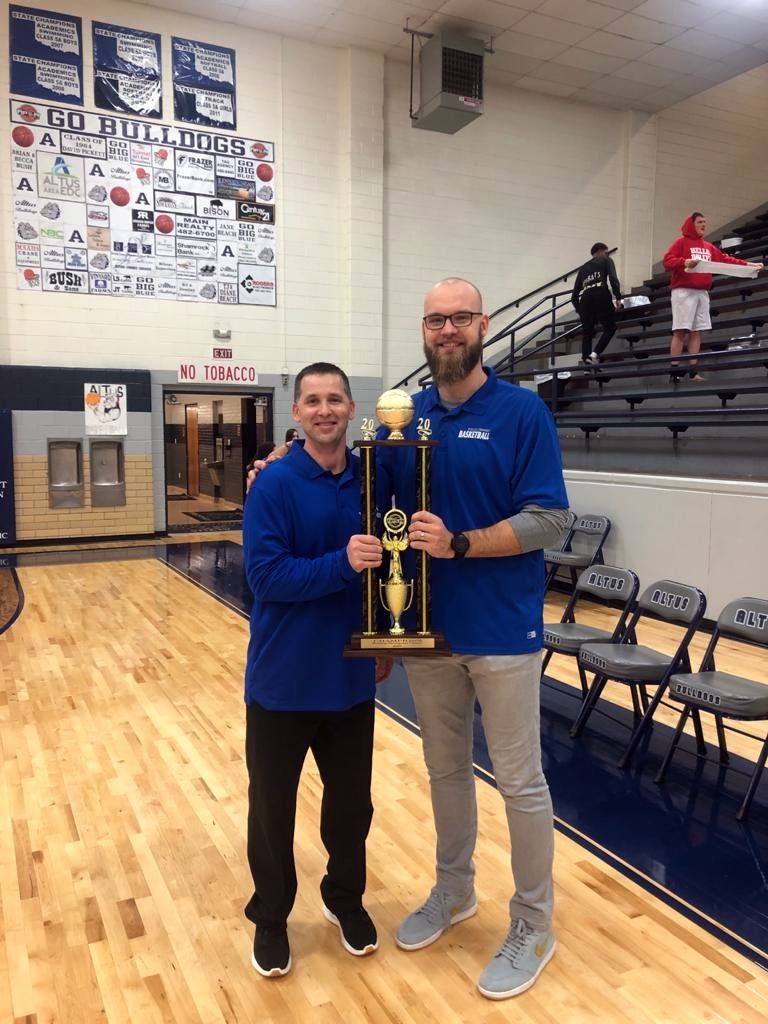


Karolis: Your own departure to the United States to study and play sports has changed your life at a 180 degree angle. Do you have any advice for parents who are hesitant – should they send their children to America or leave them to develop in Lithuania?
Antanas: I don’t know if I can advise, each case is very individual. In Lithuania, “Žalgiris” provides truly exceptional conditions for development. But again, if you go through the youth system and don’t get into the main squad, you will most likely be loaned to another club. That next club will demand results right away, perhaps the team will have more experienced players for whom the coach will give more minutes. Every case is different. I don’t know much about “Rytas”, but “Žalgiris” really takes care of their most talented kids.
Karolis: What if a boy or girl plays somewhere that is not even on the LKL map, and does not represent the national teams of his age group?
Antanas: If there are thoughts about America in the family, it is important to come here as early as possible. Adaptation may take time. A couple of days ago I was talking to one coach from a high school in New Jersey. He told me he had one really talented European arrive for 12th grade. By the time he understood how to play basketball over here, by the time he understood what the coach wanted, the season was over.
Those that come here for 10th or 11th grade have much more time to get used to the new system, environment, academic requirements and present themselves properly to college coaches and scouts.
Karolis: You mentioned academic requirements. In America, sports and education go hand-in-hand.
Antanas: Absolutely. The system here is such that high schools, and later institutions of higher education are responsible for the development of the young person. Whether it be sports, music, or dancing – everything is combined with classes. Believe me, a good diploma really has weight in life.
Karolis: Education is a very broad concept. I wouldn’t put everything down to a diploma. Going to another country broadens your horizons, teaches you to get to know new cultures, adapt to a different way of life, opens your mind, teaches independence, establishes connections with people from all over the world…
Antanas: When you’re young, it seems like the whole world revolves around basketball. But parents must take a broader view.
Karolis: Speaking of player development. The American and European systems are quite different. Which one do you prefer?
Antanas: It’s a fact that in the States there is more emphasis on individual skills and physical fitness. In Lithuania and Europe there is also a lot of attention paid to technique, but there is more focus on tactics and the team game. The NCAA is probably the middle ground between these two schools of thought. If you’re not strong individually, you won’t even get a chance, but team play is more emphasized here than in the NBA.
Karolis: At the start of our conversation you mentioned that one of your functions is the recruitment of young talents. What does this process look like in an organization like Wake Forest University?
Antanas: We are not the ones who pick up whatever players are left remaining on the table, but in order for us to invite those kids that we really want, we must begin our work very early – two, three, sometimes even four years before the student’s high school graduation. We try to be very diligent and concrete when talking to the player and his family. We explain what role we envision for them, what Wake Forest can give them in their further career. Our vision must appeal not only to the one we are interested in, but also to their agent.
Karolis: A year ago we talked about Matas Buzelis. You told me that you personally are putting in a big effort. I remember your words: “Yes, you will definitely get to the NBA from Duke or Kentucky, but you will get there just the same from Wake Forest. But in our team you will be the one that always has the ball and the one we shape our whole game around”. Were you surprised by Matas’ decision to skip the NCAA route altogether?
Antanas: Matas and his family made the best decision for themselves, which we really do respect. I’m glad that I have such a good relationship with Matas’ mom and his dad. We talked, we talked many times. When the decision was made, Matas called personally, informed, and explained the reasons. I don’t have a problem with it – he wants to completely focus on basketball and pay full attention to his NBA preparation. He has taken two steps forwards since we actively recruited him and most likely has outgrown our team’s jersey without ever putting it on.
Karolis: Are there any other Lithuanians on your list? How strong is Wake Forest’s interest in international talents?
Antanas: We are currently interested in 3 Lithuanians, but we haven’t submitted any official offers yet. We follow youth championships closely and collect information. Specific conversations are held with those who are already here, studying in American high schools.
Karolis: As we are talking, I can sense that you feel happy, you are living and breathing your work. What are your long-term goals? Where will Antanas Kavaliauskas be in 5-10 years?
Antanas: I see myself as a basketball coach. I want to coach here and I want to coach in Europe too. I have had great teachers throughout my career. One of them is the current head coach of our team, Steve Forbes. I am more than motivated to stand behind the wheel of a team myself one day.